The experience your customers go through with your brand leaves some insight behind. It is the difficulty in making that information count. Customer relationship management (CRM) software does precisely that-transforming disparate information into high-quality insights that are both person-focused and business-centered, driving business expansion.
CRM programs also allow your organization to enjoy access to real-time customer and prospect information by organizations cross various teams. Digitally automated, modern CRM platforms enable companies to build stronger relationships, streamline operations, improve efficiency, and generate more revenue (enhanced by artificial intelligence (AI). Better still, the current solutions are user-friendly and designed to be easy to use.
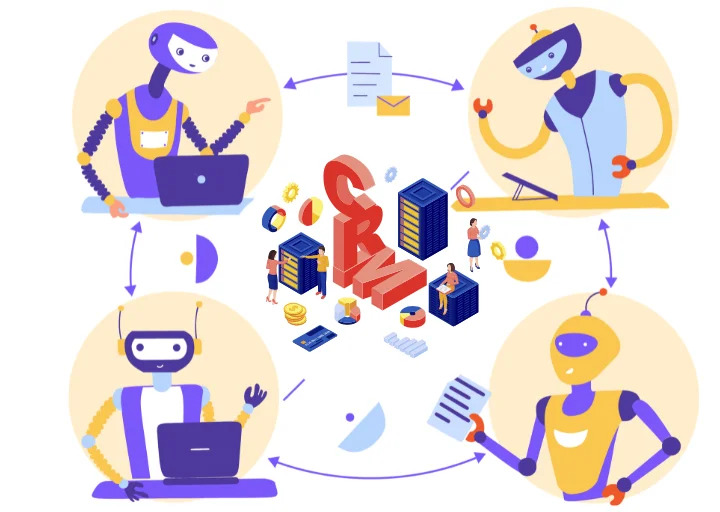
What is CRM software?
CRM software links information among several touchpoints in the buyer journey and assists businesses in understanding their customers more and building long-term relationships. It breaks down departmental barriers-unifying sales, marketing, customer service, commerce, and other departments-so that all are operating out of the same up-to-date information.
In its simplest form, CRM is an integrated hub of data warehousing and arrangements of vital customer information like their contacts, communication preferences, their history of interaction, and their purchasing behavior, along with the services they received. It takes this data and converts it into a single, 360-degree perspective on every customer, which enables your teams to create experiences that are unique and personalized to gain satisfaction and loyalty.
The AI capabilities are also incorporated in modern CRM systems. Custodial CRM is an artificial intelligence-based system that is capable of tracking customer activity in departments and channels of interaction, organizing database entries, and making actionable observations. Smart AI assistants help workers in terms of independent task execution, pattern recognition, and proposal of further actions. Such digital assistants can discover upselling and cross-selling, create tailored marketing histories, provide service replies, and aid smarter organizational-wide decision-making.
Your teams will always know the position of customers in the sales cycle, the difficulties they have already gone through, and the best way to provide the most useful experience with access to real-time insights.
The benefits of CRM software
CRM management software helps businesses increase engagement, improve efficiency, and unlock data-driven growth. Here are some of the most impactful advantages.
Contact management
At all points of the customer lifecycle, it is absolutely important to have access to accurate information at all times. Be it contact information, purchase history, meeting records, or other past service communication, the CRM software becomes one point of truth with regard to customer data of the company as a whole.
Simplified collaboration
CRM sites ensure that the data about customers is available at any time and from any place. In-app integrations, which include Slack amongst others, enable the teams to communicate updates, work on documents, and invoke AI-based activities right within their daily workflow. This connectedness enhances group work and prevents the projects stagnate.
Easy to get started
CRM solutions via clouds do not require costly hardware, servers, and other security structures. The need to have more IT employees to install and maintain it is not necessary because updates, performance, and security are handled remotely by the CRM vendor. This enables organizations to concentrate capital on revenue-generating programs and customer interrelations.
Scale as you grow
The CRM software is meant to expand with your business. You have the option to start with basic capabilities and add functionality and access to users as your requirements change. The nature of cloud-based platforms is online with constant updates; therefore, there is no need to disrupt the operations to upgrade or to install. The system is scalable and made to suit the growth of your company, as frequent changes to the platform are no longer necessary.
Data for reporting, analytics, and forecasting
Reporting tools and customizable dashboards will create a clear visibility of the performance metrics. AI-powered CRM analytics provide speculative insights and are useful in predicting sales trends, identifying at-risk customers, and suggesting a strategy to take next. The future can be planned by businesses with the confidence of having the intelligence based on data.
How does CRM software use AI?
Instances of AI have taken over as a regular attribute of CRM systems in the industry. It provides real-time insights and enhances customer relationships throughout the lifecycle. The AI agentic systems, in this case, Agentforce, can examine large amounts of data, identify patterns, and allow more personalized experiences in the various departments. Generative AI also helps improve productivity by generating customized content, such as sales emails, marketing campaigns, customer support replies, and even custom storefronts, on the basis of CRM information.
Lead scoring
CRM (customer relationship management) systems, so far using AI, examine information of both customers and prospects, enabling sales units to focus on high-value leads. Sales AI can suggest the best approaches to use by finding out the similarities between the current opportunities and the prospects that have been transformed in the past. This is a niche strategy, which is essential in improving concentration, increasing output, and boosting revenues.
Automation workflows
Autonomous agents work together to achieve AI automation, which addresses repetitive tasks in the system, namely, data entry, assignment of leads, and routing of service requests. These intelligent systems are in contrast to the traditional robotic process automation (RPA), where performance is improved by a reinforcement learning mechanism. The workers are liberated to focus on strategic and high-impact initiatives.
24/7 customer support
AI chatbots provide 24/7 support to customers, decreasing response time and enhancing the efficiency of the services by 24/7 AI is able to write the representatives’ summaries of their calls, send follow-up messages, and make sure that their inquiries are responded to as soon as possible.
AI on customer service built on your CRM platform can be used to ensure 24/7 customer service with automated customer responses, automated escalation with human intelligence, and custom communications. The customers have a chance of prompt service, and the level of service is always high.
Personalized experiences
AI can be used to make highly personalized product platforms, promotions, and messages by analyzing large amounts of behavioral data. These tools enhance the interaction and sales, and they willingly seek cross-selling or service opportunities. With this intelligence, marketing AI and commerce AI are used to create unique experiences that appeal to customers.
More natural interactions
CRM systems are becoming more user-friendly with the use of conversational AI and natural language processing (NLP). Employees will have the opportunity to pose questions using normal language so as to extrapolate insights, create campaigns, or access individualized customer information. Complex data could be more easily navigated and used.
What is cloud-based CRM software?
CRM systems manage and analyze substantial volumes of data. Early CRM platforms were hosted on-premise within company facilities. As technology advanced, cloud computing became the preferred model for delivering business applications. While traditional on-premise CRMs still exist, cloud-based solutions offer significant advantages.
Cloud-based CRM software is simple
Cloud-based CRM operates as software as a service (SaaS), delivering applications over the internet rather than through locally installed systems. The provider manages hosting infrastructure, security, updates, and system performance remotely, removing upfront hardware investments and ongoing maintenance responsibilities.
Users can securely access customer and marketing data anytime, from any device-including desktops, laptops, smartphones, and tablets.
Cloud-based CRM vs. on-premise CRM
Cloud and on-premise CRM models differ substantially. With on-premise CRM, companies host servers and databases at physical locations. Many organizations rely on this setup due to legacy systems or limited internet reliability. However, cloud-based CRM offers compelling benefits:
Costs: On-premise systems often require significant upfront installation and infrastructure expenses. Cloud CRM leverages existing infrastructure, reducing initial investment.
Accessibility: On-premise updates may require downtime and IT intervention. Cloud CRM platforms perform updates automatically without disrupting productivity.
AI readiness: Cloud systems more easily support advanced AI and machine learning capabilities, including real-time data processing-often too costly to maintain on-site.
How to avoid CRM software implementation challenges
Despite the wide array of benefits afforded by CRM software, it is necessary to plan carefully so as not to face challenges during implementation. There are lots of problems that are linked to old on-premise systems. Cloud-based solutions are made to reduce these challenges and speed up adoption.
Complexity
CRM implementations, whether on-premise or in the cloud, usually require a lot of customization and configuration. The single-threaded systems, which can only process one process at a time, are capable of slowing down integration and workflows.
Solution: Cloud CRM solutions are highly customizable and scalable in order to respond to business dynamics.
Integration
On average, it consists of hundreds of applications, most of which fail to communicate with each other in an organization. In the absence of smooth integration, it is hard to have a complete view of the customers.
Solution: Choose an AI-based CRM constructed to make it easy to integrate accounting, marketing, service systems, and e-commerce systems. Implementation can also be facilitated by good vendor support.
Training
Certain CRM systems have complicated interfaces, which need training at an expensive fee and time. Rather than making processes efficient, such systems may impede adoption.
Solution: Select a CRM with the ability to have more flexible support features, such as online support, phone support, and an extensive onboarding course. The ability to study at their own pace empowers the users, making it more successful in the long term.
Security
Companies have access to the sensitive data of their customers, so the problem of cybersecurity is essential. Through user behavior analysis, detection of anomalies, and the onset of protective measures, AI helps to bolster CRM security. Protecting information is the duty of companies, both legally and ethically.
Solution: Be sure that your CRM has in-built security measures, i.e., encryption, firewalls, and access controls. Your provider is supposed to keep updating defenses against any new threat.
How to choose the right CRM software for your business
To choose the appropriate CRM, it is necessary to consider the specific objectives and business requirements of your organization. that fit all businesses of any size or industry.
Consider the size of your business today and tomorrow
When evaluating CRM software options, assess the number of employees, customers, and data your organization manages, along with the complexity of customer interactions and the volume of inquiries and requests you handle. Then determine the degree of personalization you aim to deliver. Choose a CRM that meets your current requirements and can expand as your business grows, or begin with a solution designed for small businesses.
Look ahead to long-term scalability and flexibility
Select a CRM that expands your business and is compatible with changing technologies, especially in the areas of AI and automation. Social media that are highly integrable and have powerful artificial intelligence tools will future-proof your investment.
Get features that serve your business needs and processes
Determine existing issues in how to deal with customers. Identify what CRM features, including automation, reporting, or campaign management, can help eliminate those pain points and put them first on your list.
Factor in overall pricing and customer support costs
When pricing, take into account subscription plans, add-on users, premium features, and long-term scale. The degree of customer support is also different. Investing in holistic support can result in the implementation becoming easier and long-term.
Finding the right CRM for your organization
Long-term success starts with a strategic selection criterion of CRM. Contemporary AI-based CRM systems make it possible to automate, predict, and engage with customers on a mass scale. When the right solution is implemented, your organization might become stronger in relations, capture new perspectives, enhance the quality of services, enhance sales, advance marketing activities, and establish itself as a company in the long run.
Frequently Asked Questions